
Category: Spaceland Policies
-
Skydive Spaceland Camera Policy
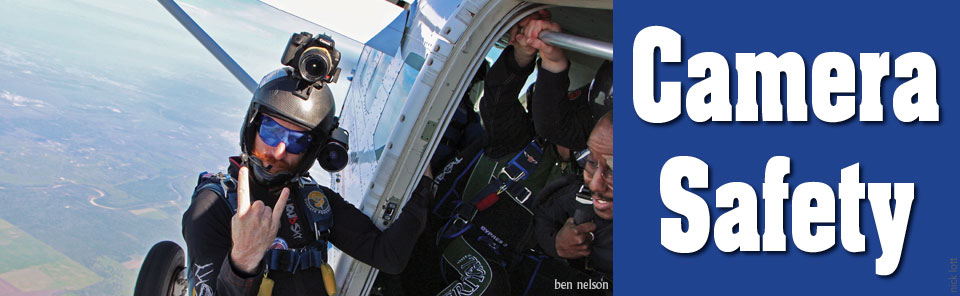
Forrest Gump might have said that skydiving and cameras go together like peas and carrots. It’s an awesome thing to capture what’s arguably the world’s most fun aerial activity with a nice tiny, high-quality camera such as a GoPro. It won’t get in the way, right? You won’t even know it’s there! To go back to our peas-and-carrots analogy, it doesn’t quite fit the skydiving scene in the sense that…
-
Manifest General Reminders
If you find yourself at the dropzone, you will most likely be spending some time in the manifest office. With the rapid rate of growth that Skydive Spaceland has been experiencing, we want to spread the word on some general reminders and guides for manifesting and sharing the space of the office. The Basics: How to Manifest What to start with: Number of slots you need The minimum call time…
-
Special Dives: Low/High Pulls, Toy Dives, Pond Swooping
Low/High Pulls High openings and low passes must take into account the number of airplanes flying, other skydiving activities, and canopy descent rate. We cannot always accommodate low passes or high openings. We cannot guarantee that low-pass jumpers will land alone unless only one plane is flying. Ensure that the aircraft is configured for your exit regardless of your exit altitude. Licensed jumpers wishing to open above 5,500 feet (such…
-
Landing/Canopy Safety
Canopy Safety Wind indicators: Landing direction arrow, flags, wind sock. The landing direction arrow is an air-traffic control device that sets the landing direction on the north side of the runway. Know the landing direction before takeoff, and check the landing direction indicator (LDI) north of the runway after you open and check canopy in case winds have changed. Follow the landing direction indicator when landing north of the runway. No…
-
Aircraft/Loading Area Safety and Policies
Winds Aloft This information is posted daily on the board near the aircraft mockups. Also check out our weather page… Loading Area We use loading area 1 (north of the hangar) on cold starts/after fueling, and loading area 2 (northwest corner of hangar) on hot turns. Please be in the loading area on the 5-minute call. You must be fully geared up, ready to jump, before entering the loading area.…
-
Wingsuit Dive Policies
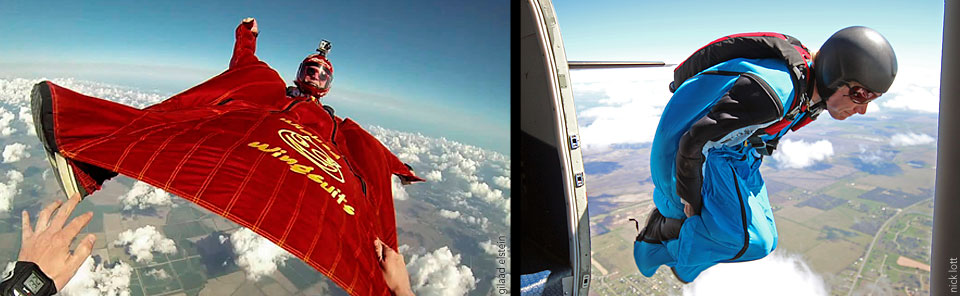
Wingsuit jumps carry many of the same risks as tracking/angle flying because of the horizontal movement component. They can also pose a risk to later-dropping aircraft because of the extremely slow fall rate. They can pose challenges when dealing with malfunctions as well, because of the limited mobility many suits allow the jumper before wings are released. These dives have a higher chance of landing off the DZ. Also, since…
-
Movement Dive Policies
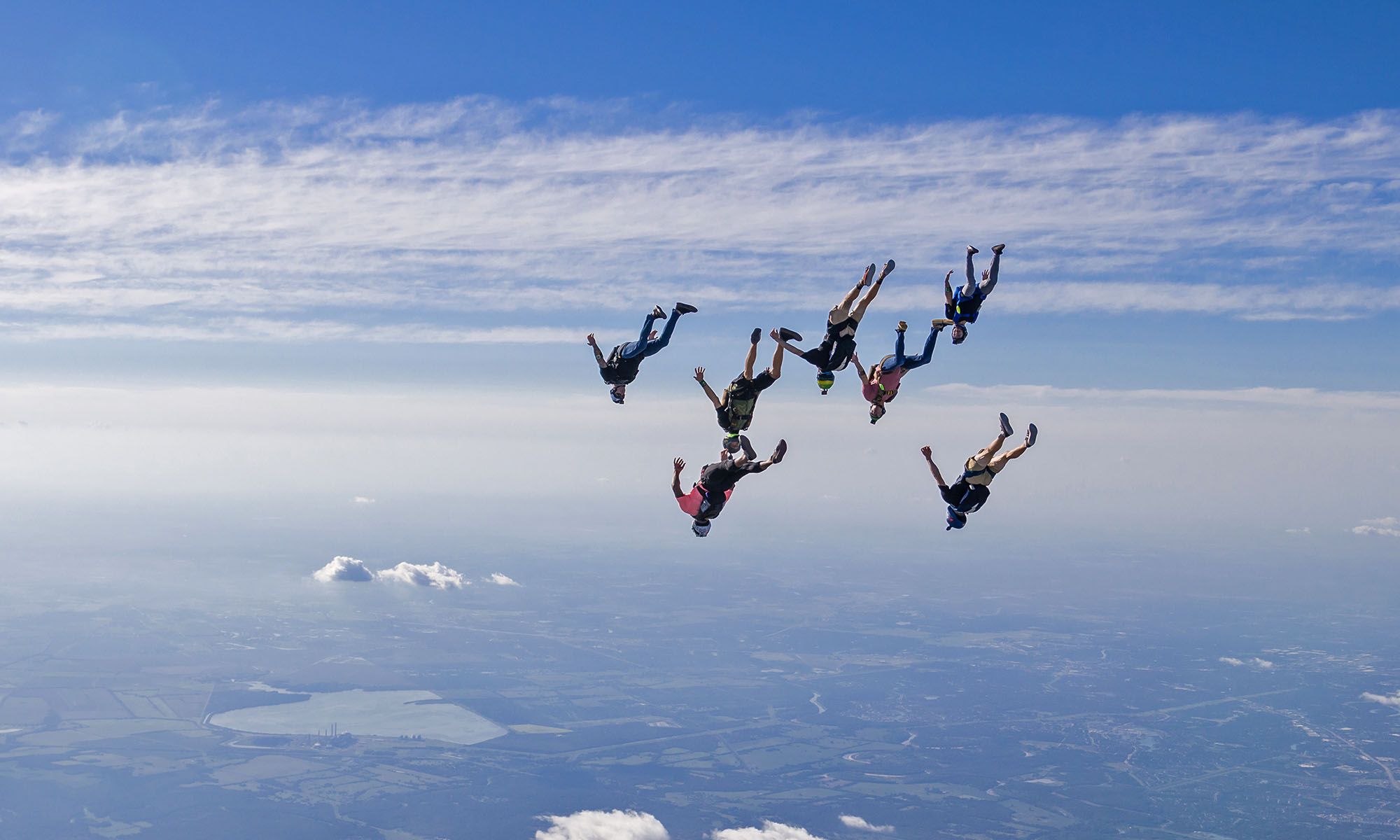
Horizontal movement jumps are fun… free flowing… and inherently potentially much riskier than jumps that fall straight down. Any jump in which jumpers plan horizontal movement other than tracking for separation after breakoff requires good planning and execution to minimize the additional risks to everyone on the load. Above photo by Daniel Angulo! That responsibility is 100% the job of the organizer(s) doing movement jumps, and it should not be…